Monday, May 18, 2026
Magazines, Newsletters, Newspapers, and News Snippets — There Is a Need for All of Them
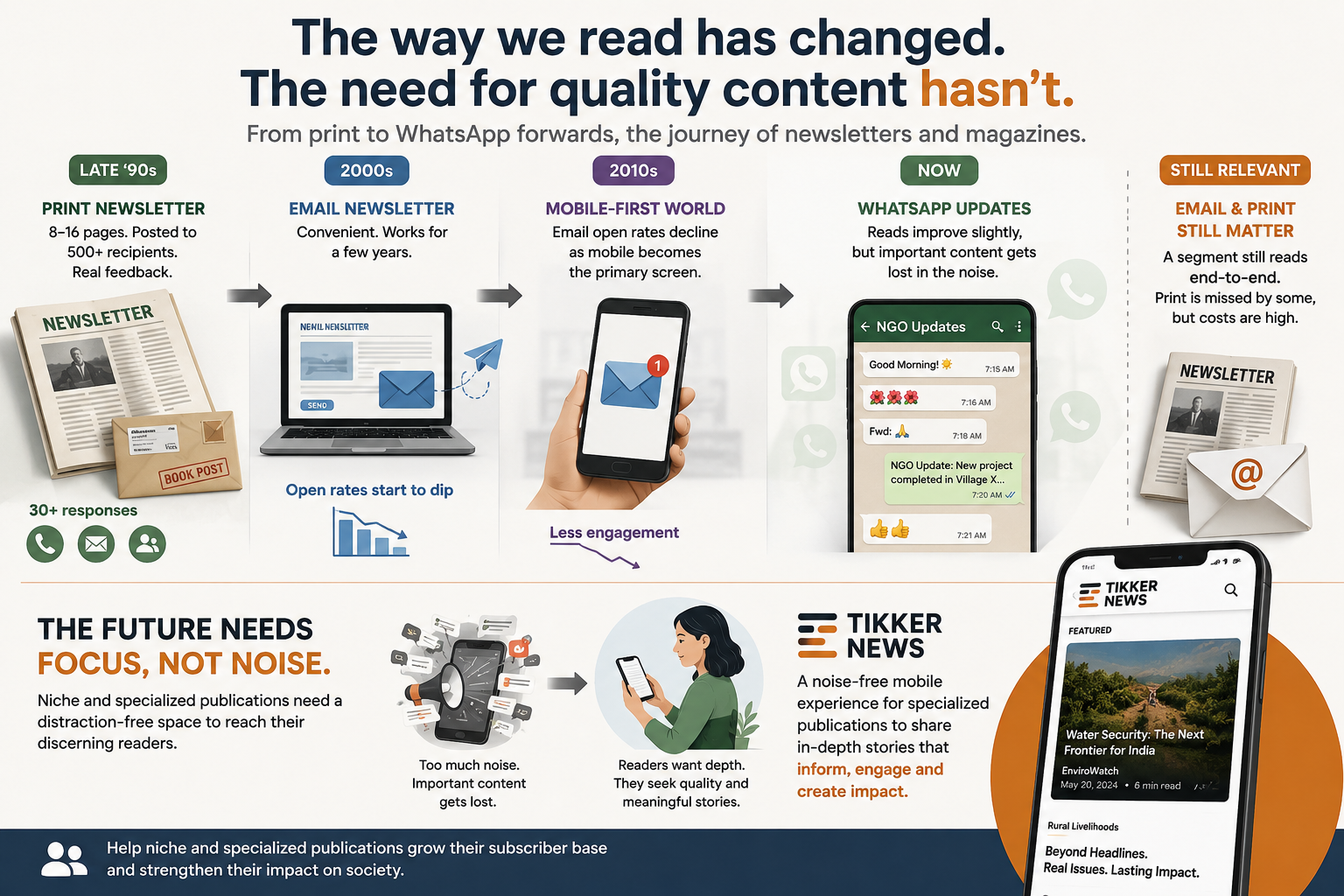
There was a time in the late '90s when I used to curate and publish a monthly newsletter for an NGO: about 8–16 pages filled with detailed reports of all the activities completed in the previous month. We would send them by book post to over 500 recipients each month and, in return, would receive at least around 30 responses — by phone, email, or in person — giving us feedback on the latest issue and its contents. In addition, many of the authors received direct feedback as well.
Then, as the years went by, the feedback dwindled, and we realized most of the recipients were not reading much beyond the front page, if that. We eventually stopped printing and switched to email newsletters. This worked for a couple of years, as many of our recipients spent quite a bit of their day in front of their computers. Then, as mobile phones started becoming the primary reading device, email open metrics began to decline as well.
Now, the NGO shares details of its activities — both completed and upcoming — on WhatsApp. The reads have increased slightly, but many of the articles still get drowned out by "Good Morning!" messages, forwards, and smileys.
The NGO still sends out its monthly newsletters by email because there remains a segment of the readership that prefers them, and some still read them end-to-end in a single sitting.
There are also a few who wish they could still receive printed versions, but the NGO has decided that the costs no longer justify the returns.
This is not a unique experience. Organizations publishing newsletters — and even many professional magazines — have gone through this evolution. Some, like Newsweek, PC Magazine, and Entertainment Weekly, went completely digital, while others such as The Caravan, Time, and The Economist still print, but rely more and more heavily on online subscriptions and social media distribution.
Print and digital magazines and newsletters still have a place in this world, but discovery and retention seem to rely increasingly on digital presence.
Somewhere in all this, there is a need for a noise-free mobile presence — something that is only partly addressed by dedicated apps. Unfortunately, dedicated news apps only really work for large publications. For smaller, niche, specialized, and vernacular publishers, dedicated apps often do not make economic sense at all.
Tikker News wants to fill this void for specialized publications, so they can reach that segment of readers who are discerning, interested in going beyond headlines, and eager to understand the issues we face today.
If you are a media person, what are your thoughts? How can niche and specialized publications increase their subscriber base and, consequently, have a greater impact on society?